
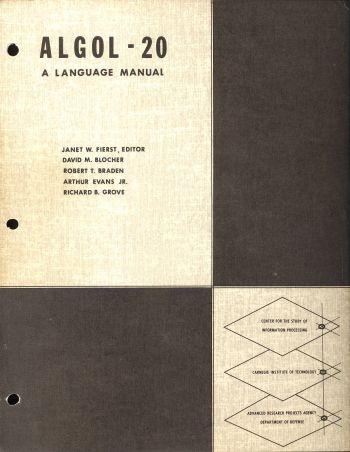
If you’ve ever wondered where modern languages like Pascal, C and Java got their structure, the answer often points back to ALGOL. Short for "Algorithmic Language," ALGOL was created in 1958 and quickly became the academic standard for describing algorithms. It wasn’t just a language - it changed how we think about code. By introducing block structure, begin/end, recursion and lexical scope, ALGOL set the template for code organization.
ALGOL 60, the best-known version, became the preferred language for publishing algorithms in academic work. Although it never gained mass commercial adoption - partly due to a lack of standardized I/O - its influence was immense. Languages such as Pascal, Simula and C descend from the ALGOL family, and its legacy can be seen in almost every modern codebase.
So even if you’ve never written a line of ALGOL, you’ve almost certainly been shaped by its ideas. It’s like an old teacher whose lessons quietly inform everything that comes after.